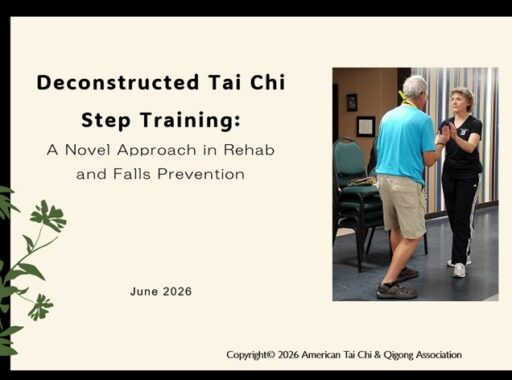
A recent scientific study may quietly reshape how Tai Chi is understood in rehabilitation and falls prevention.
Most Tai Chi practitioners already know that Tai Chi improves balance and reduces falls. That is not the surprising part.
What makes this new research different is that the researchers did not teach full Tai Chi forms.
Instead, they extracted specific Tai Chi movement components — including weight shifting, forward and backward stepping, lateral stepping, standing practice, and single-leg balance training — and used them as a structured rehabilitation method.
The results were striking.
Stroke patients who practiced this “deconstructed Tai Chi step training” alongside conventional rehabilitation showed significantly greater improvements in lower-limb function, walking ability, and joint mobility than patients receiving standard rehabilitation alone.
But the implications may extend far beyond stroke recovery.
This study raises an important question for the Tai Chi community:
What if the therapeutic power of Tai Chi comes less from memorizing choreography and more from training specific movement principles hidden inside the forms?
For Tai Chi teachers, this could influence how beginners, older adults, and rehabilitation populations are taught in the future.
For healthcare professionals, it may provide a more accessible and measurable way to integrate Tai Chi principles into rehab and fall-prevention programs.
And for older adults or caregivers, it offers encouraging evidence that meaningful Tai Chi-based benefits may be possible without learning long or complicated forms.
The premium version of this article explores:
- What “deconstructed Tai Chi step training” actually means
- Why stepping transitions may be more important than choreography
- How Tai Chi trains dynamic balance differently from many conventional exercises
- Why backward stepping and single-leg training matter so much for fall prevention
- What this study may reveal about the neurological mechanisms behind Tai Chi
- Practical insights for Tai Chi teachers, rehab professionals, stroke survivors, and caregivers
- Why this research may represent a major future direction for therapeutic Tai Chi