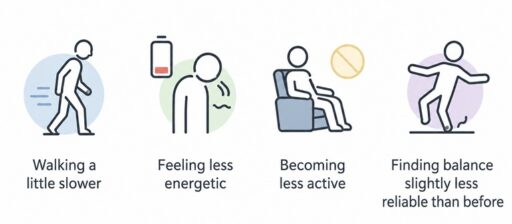
Most people think of frailty as something that happens late in life. But long before frailty develops, many older adults enter a stage called prefrailty—a period marked by subtle changes such as slower walking, lower energy, reduced activity levels, or a slight decline in balance and confidence.
The good news? This stage may be one of the best opportunities to take action.
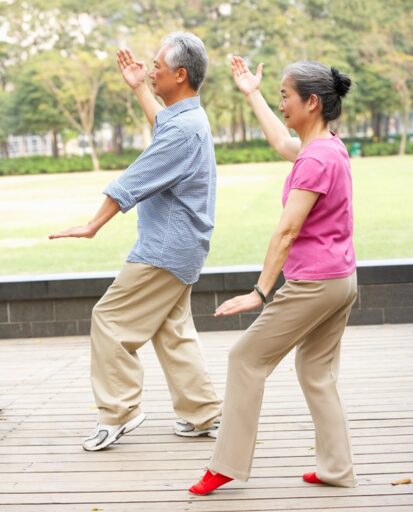
A new randomized controlled study examined the effects of a 12-week Tai Chi program in prefrail older adults. Researchers found that participants who practiced Tai Chi three times per week experienced meaningful improvements in balance, physical performance, standing stability, walking speed, and overall gait quality.
What makes this study especially interesting is that the researchers went beyond traditional balance tests. Using advanced motion-capture technology and biomechanical analysis, they investigated how Tai Chi may influence the body’s movement patterns during walking and standing. The results provide new insight into why Tai Chi has become one of the most widely recommended forms of exercise for healthy aging.
For Tai Chi teachers, the findings reinforce the importance of reaching people before significant decline occurs. For older adults and caregivers, the study offers encouraging evidence that simple, low-impact movement practice may help preserve mobility, independence, and quality of life.
In the premium version of the article, we explore the study in depth:
- 🌱 Understanding Prefrailty
1.1 Early Signs of Decline
1.2 Why Prefrailty Matters - 🥋 The Tai Chi Program
2.1 The Structure of the Program
2.2 The Familiar Tai Chi Forms in the Program - 📈 What Improved After 12 Weeks?
3.1 Better Functional Balance
3.2 Better Control While Standing Still
3.3 Better Walking Mechanics - 🔍 Why Might Tai Chi Improve Walking?
4.1 Improved Hip Function
4.2 Better Ankle Mobility
4.3 More Efficient Weight Transfer - 👨🏫 What This Means for Tai Chi Teachers
5.1 Early Intervention Matters
5.2 Consistency Matters
5.3 Traditional Forms Already Work - 💡 Practical Tips for Older Adults
6.1 Start Before Problems Become Serious
6.2 Focus on Weight Shifting
6.3 Practice Single-Leg Support Safely
6.4 Move Slowly Enough to Feel the Details - ⭐ Takeaway
Sometimes the best time to address frailty is before it begins. This research suggests that Tai Chi may be uniquely positioned to help.
➡️Purchase the premium version
