Stroke Recovery Without Movement? What Researchers Discovered About “Wave Hands Like Clouds” in Tai Chi
A clinical study reported by BMC Complementary Medicine and Therapies in March 2026 suggests something remarkable: simply imagining a Tai Chi movement, without physically doing the movement, may help stroke patients regain arm function.
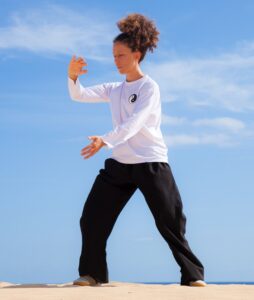
The movement researchers studied is familiar to most practitioners:“Wave Hands Like Clouds” (Cloud Hands).
Why Arm Recovery After Stroke Is So Difficult
Stroke frequently damages the brain networks that control movement. As a result, many survivors struggle to regain normal use of their arms and hands.
In fact, upper-limb motor impairment is one of the most common long-term challenges after stroke.
Rehabilitation typically relies on repeated physical exercises designed to retrain the brain.
But in the early stages of recovery, many patients cannot move the affected arm effectively.
This is why researchers have begun exploring an unusual approach: training the brain through mental practice.
Practicing Movement Without Moving
Motor imagery training involves mentally rehearsing a movement without physically performing it.
Brain imaging studies show that when people vividly imagine a movement, many of the same brain regions activate as during actual movement.
In other words, the brain can begin rebuilding motor pathways even before the body is able to move fully.
Why Researchers Chose a Tai Chi Movement
In the study, stroke patients were randomly assigned to one of the two groups: one group imagined performing a simple daily action while the other group imagined performing the Tai Chi movement Wave Hands Like Clouds.
Both groups improved.
However, the Tai Chi imagery group experienced significantly greater improvement in arm motor function.
Why might imagining a Tai Chi movement produce stronger rehabilitation effects than imagining an everyday movement?
The answer may lie in how Tai Chi movements engage the brain.
What Tai Chi Practitioners Will Learn in Our Premium Article
In the premium article on this subject, we explore the study in depth and explain:
• the exact Tai Chi imagery protocol used in the clinical trial
• why Cloud Hands may stimulate motor recovery more effectively than conventional rehabilitation exercises
• how Tai Chi practitioners can train motor imagery to deepen internal practice
• how Tai Chi teachers can apply these insights when working with students recovering from neurological conditions
👉 Read the full premium article to learn the complete training method.
FAQ: Tai Chi and Stroke Recovery
Can Tai Chi help stroke recovery?
Research suggests that Tai Chi may help improve balance, coordination, and motor function after stroke. Some studies also indicate that mentally rehearsing Tai Chi movements may support neurological recovery.
What is the Tai Chi movement “Cloud Hands”?
“Cloud Hands” (Yunshou) is a classic Tai Chi movement characterized by slow circular arm motions coordinated with relaxed breathing and body rotation. It is often used to develop coordination and body awareness.
What is motor imagery training?
Motor imagery training involves mentally rehearsing a movement without physically performing it. Brain imaging studies show that imagining movements can activate many of the same neural pathways involved in actual movement.
Can imagining movements help stroke rehabilitation?
Some rehabilitation programs use motor imagery to help stroke patients retrain the brain when physical movement is difficult. Research suggests that this mental practice may support recovery of motor function.
URL Slug
tai-chi-wave-hands-like-clouds-stroke-recovery-study
Meta Description
A surprising finding about Tai Chi and stroke recovery: simply imagining the “Cloud Hands” movement—without physical movement—may improve arm function.
